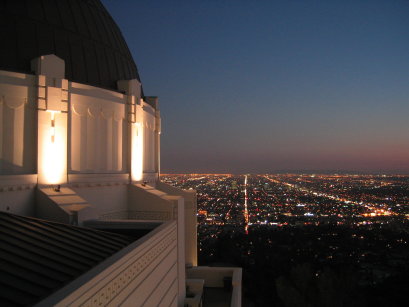
 You may recall a post I did some time ago about a worrying development at Griffith Observatory, just before it reopened after the splendid three year refurbishment. (See here for my long post -with pictures- of my visit to the facility around the time of its reopening.) Various reports said that they’d decided to hire actors (not trained in the subject of astronomy) to largely replace the lecturers (trained in the subject of astronomy) for the new planetarium show. This seemed a very disturbing turn of events, and so I did the blog post about it.
Well, I’d put the issue out of my mind until a few weeks ago when Jerry Weil, one of the show’s creators, showed up in the comments section (I love Google) and made his case for why the new show was just fine. Among the things he said in his comments were:
With the new structure of the shows, there is no time for a Q&A period, so there is no need for the lecturers to have any knowledge of astronomy. It is important to keep the show exciting and entertaining, but the star of the show should be the visuals.
Now, I have not seen the show, and so cannot comment in detail on its contents, or the setting, but I am -to say the least- very worried about such a statement. So I asked him to unpack the statement a bit more, thinking that I may have misunderstood. His clarification:
As far as the role of the lecturers, I was certainly one of the people who originally thought it was an unnecessary burden to have live lecturers when a canned narration would work just as well. After seeing the show, I have to say that having someone there live really adds to the excitement of the show. It makes it “feel†more interactive, and it certainly keeps your attention knowing there is a live human there speaking. However, since it is all scripted and there is no Q&A, it is not necessary for the lecturers to have any knowledge of astronomy. I am also an actor myself (in fact I had coincidentally worked with the actor/lecturer at the show I saw), and I have certainly played many roles in areas where I had no prior knowledge. In this situation it’s more important to have people who can convey the excitement and wonder of the Universe than to have a deep understanding of the subject matter.
Not wanting to repeat my often-made point that education and entertainment need not be thought of as mutually exculsive, I made a mental note to see the show and revisit this issue if I thought I could contribute further.
Remarkably, a few days later I was at a party at a neighbour’s house (Cinco De Mayo), and it was a great opportunity to meet some more neighbours. Among those were Click to continue reading this post →
 Writing in Slate magazine, James Owen Weatherall seems a little confused about how particle physics works. Based on a rumour that there’s a new and significant signal seen at the DZero detector at the Tevatron at Fermilab (Illinois), one of the article’s titles is “Why the rumored discovery of the Higgs Boson is bad news for particle physics”. Supposedly, the big new machine, the Large Hadron Collider (LHC – see more about it here, and what physicists are hoping for from it), about to switch on later this year, would have nothing to do, and would be a waste of billions of dollars. You can read about the original rumour here. (Above right: A random collision event I grabbed from the DZero experiment.)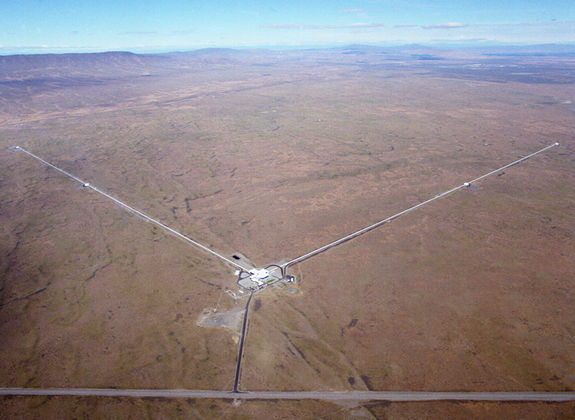
 Remember the Tune “Money for Nothing”, by Dire Straits? It was a big hit in the 80s. (Remember those?) Well, Warren of the new blog

 So, unhappy with the state of affairs, I was on the warpath. I began to consider how to deploy my shiny weapons of war. I considered what to do. I could not believe that this really is the policy of the people overseeing the whole operation of Trojan Hospitality (the organization that oversees the whole of campus catering) – it must have been a unilateral effort on the part of the manager and staff in that particular cafe. Or I least I hoped so. So before calling on even higher powers from, say, the Provost’s office, I thought I’d talk to the head person at Trojan Hospitality. If I got no joy there, then I’d go higher. (Ironically, not long ago I’d politely turned down an approach for me to consider a position in the Provost’s office to become a sort of official campus-wide trouble-shooter on an ad-hoc basis for problems of precisely this sort.)
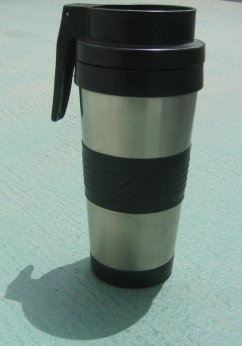 What was the matter? You’re possibly going to think that this is an insignificant matter, but I don’t agree. We all went for coffee to one the (usually excellent, with usually very good staff) cafes on campus, and as usual I brought along my own coffee cup. I do that a lot, primarily since it means that I do not use any paper cups as a result, and secondarily because it keeps the coffee warmer for longer, is close to spill-proof, and is much nicer to drink from. I’ve been doing this for years. The routine is usually this: I ask for a small coffee, they hand me a small coffee cup, I smile and say I already have a cup and hand it back, I pay for the coffee, and I pour myself a small coffee and leave. It’s not always in that order, but it is close enough.

 There was a nice