
The Man of Tomorrow?
[Updated with a bit of video!]
Earlier this week I went for a walk with Nick Halmagyi to chat about physics, and since he had not been down to the meadows and gardens over by the neighbouring Aspen Institute, we wandered down that way. It was just after lunchtime, and a very hot day, and as we got near the Institute, we diverted away from physics so that I could tell him briefly what the significance of the Aspen Institute is. I explained that it was an important “think tank”, host to thinkers in the humanities, sciences, and diplomats, presidents, ex-presidents, and other dignitaries, who come and think great thoughts about the problems of the world. Well, let me use their own words from their website:
The Aspen Institute, founded in 1950, is an international nonprofit organization dedicated to fostering enlightened leadership and open-minded dialogue.
As an example, I explained, it is probably the sort of place that Al Gore might have come to in order to think deeply about the environmental issues he champions. It is nice that the Aspen Institute is right next to the Aspen Center for Physics, and the two organizations, while now independent (but the Center actually grew out of the Institute, see here) sometimes work together on various matters including public outreach. The public lecture I gave here last year as part of the Heinz Pagels Memorial Lecture series (see e.g. here and here), for example, was actually over in the Paepke auditorium, one of their buildings.
We approached the main grounds of the Institute, near their residence buildings, and were greeted by a most frustrating -and ironic- sight. Their sprinkler system was fully on, spraying water unnecessarily into the air and onto the asphalted walks, with some making it onto their lawns, where even there it would mostly evaporate (in addition to aiding the hot sun in scorching the grass somewhat). For once, I did not have my camera and so cannot share this horrible sight with you. For a moment it was as though I was back in LA, but this was Aspen, where everyone talks about the environment. Then I remembered – everyone talks about the environment. At the same time, there are more and more SUVs every time I come here (rental companies even try to force SUVs on you when you try to rent a regular compact car – did you read my story of that last year?), more and more land seems to be cleared to build ever-larger houses, and so forth. On the other hand, bicycle use is very high here, there’s an excellent free bus system, an enforced reduction of individual car access to the Maroon Bells wilderness area, and I imagine several other worthy environmental efforts that I have not seen are being made. So it is a tale of two communities and mind sets. It’s complicated, as with any populate. But you’d have thought the Aspen Institute would be “fostering enlightened leadership” by not watering their lawns and (sidewalks) with vast amounts of water at the maximally worst time of day to do so in terms of effectiveness. (Frankly, given the environmental disaster most lawns are, one could go further and hope that in the spirit of leadership, they’d turn more of their expanse of lawns into other use, perhaps expanding the excellent wildflower garden they have in one corner, or letting more of the surrounding meadows repopulate the grounds. It could be rather beautiful.)

Anyway, we shook our heads at the irony of the sight and we wandered off toward the river, continuing our chat about matters in other dimensions (no, really). The next day I came back at that same time to check the sprinklers again (with camera), since such systems are often on timers, but had it rained very heavily the previous night and so -happily- it did not seem that the sprinklers had been used.
On Wednesday I returned once more. The sun was overhead and strong again (not as much as Monday) and the main system was not on. But once again I noticed signs of watering, and saw a smaller component of the lawn being watered by a hose-driven system. I now think that it might be that they were sprinkling (well, gushing) on Monday (and partly on Wednesday) in the mistaken belief that pouring water (and into the air, where it rapidly evaporates) on the lawn while the sun is baking it will somehow help, and they did it on an ad hoc basis, but I can’t be sure. Either way, it is a terrible waste of water resource by an organization that is committed to leadership in matters of importance, such as the environment.
Then I noticed that many people wearing name badges were heading from the Institute toward the direction of the auditorium and the Aspen Music tent. This fit with the next deliciously ironic thing: Al Gore was going to be talking! He’d been at the Aspen Institute (I’d no idea of his presence or the event until a radio announcement on Wednesday morning), and the sprinkler matter, this was remarkable. Convenient, one might say.
It turned out that it was not taking place in the Paepke auditorium, as I thought it […] Click to continue reading this post
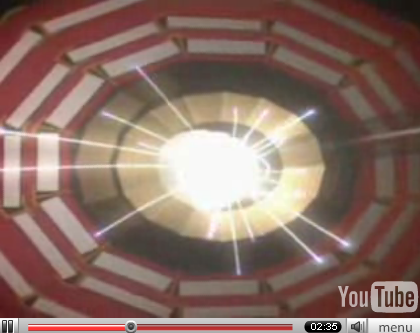 But anyway, where was I? Oh, right. Someone called John Barrowman (apparently one of the stars on those shows? He plays a scientist? I honestly don’t know, but you will, if you’re a fan) took a visit to CERN (the particle physics lab in Europe you often read about here and elsewhere) to better inform himself about the intersection between science and science fiction. One of the resulting jumpy noisy and (reportedly) fun videos can be found on YouTube here. There are some somewhat interesting animations alongside some of the, er…jolly madcap fun, illustrating the physics. Following the particles along the beam-pipe to the collision is not a view I’ve seen before, I’ll admit.
 I’ve not had time to look at this closely, but there’s been some remarkable news about the possible detection of water in the atmosphere of an extra-solar planet. Wow!

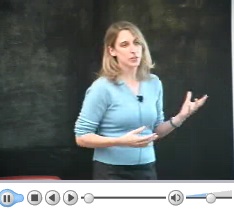 This got me thinking a bit about where we are going with all these resources, how useful they are, and -very importantly- how easy it all is to find, and then to search through. (Imagine there are 10 hour long talks broadly on your favourite topic. Assuming there are no accompanying files, how can you search them to find a specific fact that they might mention, without sitting through ten hours worth of material?) Well, ironically, one of the first things that caught my eye on SciTalks was a rather nice talk by Jennifer Golbeck (given at FermiLab last year) entitled “Social Networks, the Semantic Web, and the Future of Online Scientific Collaborationâ€. She’s quite interesting about this very topic… She describes online collaboration, data sharing, social networks, etc, all in the context of helping us do science (not just physics by the way!). She also illustrates her subject matter -still staying on topic- using examples of data sets from Facebook, Myspace, Friendster, […]