Archive for the 'biology' Category

The Darwin Online Project

On NPR the other morning, I heard a piece about the Darwin Online Project. It sounds just amazing. I hope you find time to explore the site.

Extract from Darwin’s Notebooks

It has all sorts of fascinating things that you can download or view in the above (click for larger view) manner (your very own copy of the Origin of Species, perhaps, or parts of his diaries and notebooks…), and is quite a treasure trove of one-stop-shop (but free) Darwin data. (There are even some of (his wife) Emma Darwin’s recipes.) The site is here.

Very importantly, the collection shows Darwin’s work in development, and not just the Continue reading ‘The Darwin Online Project’

Liberated Penguins

[Update:- NB: This was an April Fool joke. -cvj]

Well, I learned recently* that the BBC wildlife program makers have done it again, breaking new ground in scientific discovery while making a new series. Quite amazing this time. From the Daily Telegraph website:

The BBC will today screen remarkable footage of penguins flying as part of its new natural history series, Miracles of Evolution.

Also:

penguins in flight image from daily telegraphThe programme is being presented by ex-Monty Python star Terry Jones, who said: “We’d been watching the penguins and filming them for days, without a hint of what was to come.

“But then the weather took a turn for the worse. It was quite amazing. Rather than getting together in a huddle to protect themselves from the cold, they did something quite unexpected, that no other penguins can do.”

Above right (click for larger view) is a screen shot that I took of the incredible footage Continue reading ‘Liberated Penguins’

Police Sting Operation

I find this a bit sad, although most people will say “they’re only bees”. They (and lots of other beekeepers with their bees on trucks) were in the area to help with pollinating crops. I’m very enamoured of the idea that we still need bees to be brought in to perform such a crucial task for our agriculture, which makes it all the more sad to me to hear of the accident befalling the dutiful drones. Millions of bees were released on Sunday (and apparently hundreds of thousands probably killed) after a truck carrying several of their colonies overturned near Sacramento, California. You can listen to the NPR story (here) about the resulting chaos (and the emergency call-out to beekeepers in the area for help) and sting-fest that followed.

You can also read more on this in the local newspaper in the area, er… The Sacramento Bee. (No, really!)

-cvj

Notes from the Compost Heap

compost on the wayContinuing a bit about the microbiology to be found in the garden, I did a post not so long ago on Correlations giving an update about the composting system I started a while ago (post on that here). You might find it interesting, and so I thought I’d let you know about it. It is here.

All’s looking well for an exciting Spring season of gardening!

-cvj

Stem Cell Timeline

wisconsin-madison image  skin cellsNot surprisingly, there’s been a lot of interesting chatter about the recently announced stem cell research results I blogged about earlier. I did a longer blog post over on Correlations that might interest you (I managed to think of the pun for the title that I knew was in there somewhere, but could not manage it this morning over here). (Right: an image from the Wisconsin-Madison group. These are human skin cells.)

Mentioned there are two more NPR items I thought were of note:

Continue reading ‘Stem Cell Timeline’

Stem Cell News

kyoto nerve cell imageYou may have heard about the new stem cell breakthrough in the news. It seems to be quite significant - researchers (at Kyoto University and at Wisconsin-Madison) have managed to make human skin cells into stem cells (following on work done in mouse some announced some months back). If interested in the details (as I’m sure you are) you can read more about it in an AP story on the NPR web site here. (Yahoo’s version has pictures, such as the nerve cells above left from the Kyoto group. - try and spot the odd one out in their 14 image slide show.)

There was also a very informative chat about it with one of their science correspondents, Joe Palca, on Morning Edition, and you can listen to it here. There’ll Continue reading ‘Stem Cell News’

A Flawed Model

News report on research into the fundamental constituents of little boys. It seems that the “frogs, snails and puppy dog’s tails” model may not stand up to experiment:


-cvj

(Thanks Sarah!)

Many Mysteries Left

I spotted an interesting article by Faye Flam in the Philadelphia Inquirer about research into left-handedness. I confess that I do not know really what to make of it, but it is an interesting survey of some research in the area, with several surprising facts. Thought I’d pass it on to you. The article is here.

Continue reading ‘Many Mysteries Left’

Inside Out from the Inside

Last night’s Categorically Not! - Inside Out event was just great. The three topics contrasted really nicely, were very well presented as individual topics in their own right, and there were resonances between the different topics through the main umbrella theme - “Inside Out”.

Science writers Sandy Blakeslee and her son Matt Blakeslee did a sort of tag team presentation, taking turns to build up several aspects of the subject (covered in their new book “The Body Has a Mind of Its Own”) of one’s sense of self and that all-so-important division between inside (ourself) and outside (the rest of the universe) that we make with our minds. It’s very dynamic, of course - you extend it a lot when you use tools, from a fork when eating to the car you’re driving in (everyone grunted in recognition when Sandy mentioned how you have the instinct to duck when driving under a low ceiling in a parking garage….). One of the things that I think resonated most with the audience is the description of the work on showing how many celebrated “out of body” experiences that people get have a foundation in Continue reading ‘Inside Out from the Inside’

Categorically Not! - Inside Out

Paul Stein of Los Angeles PhilharmonicThe next Categorically Not! is a Blue* one! It’s on Sunday October 28th (tomorrow). The Categorically Not! series of events that are held at the Santa Monica Art Studios, (with occasional exceptions). It’s a series - started and run by science writer K. C. Cole - of fun and informative conversations deliberately ignoring the traditional boundaries between art, science, humanities, and other subjects. I strongly encourage you to come to them if you’re in the area.

Here is the website that describes past ones, and upcoming ones. See also the links at the end of the post for some announcements and descriptions (and even video) of previous events. (Above right: The Los Angeles Philharmonic’s Paul Stein demonstrating “small differences” on the violin, in the event with that theme.)

The theme this month is Inside Out. Here’s the description from K C Cole:

Continue reading ‘Categorically Not! - Inside Out’

Under the Sea

[Post reconstruction in progress after 25.10.07 hack (body, comments and images to follow)]:

jellyfish from AP story

There’s something ever so romantic (not in the hand-holding-under-the-moon sense) about deep sea exploration. It occupies the roughly same part of one’s emotional landscape as space exploration, I think, but it’s maybe even more exciting in some ways, because there’s something about the utterly weird and unknown being just under the surface of the familiar, while space seems so far away (actually, in one sense it isn’t, if you go straight up, but in terms of logistics, it seems and is far…). It also very much has the feel of a 19th Century adventure, with explorers going off and bagging the weird and wonderful specimens to bring back for museums and entertainment. This was seldom good for the specimens involved, of course, and we Continue reading ‘Under the Sea’

Artificial Life?

Sheril had a post about this over on the new blog Correlations, but it is so interesting (and so potentially far-reaching) that I thought I’d point to it here too.

Craig Venter’s been at it again. This time one of his teams of scientists has apparently created a synthetic chromosome in the laboratory. As he said to the Guardian:

this landmark would be “a very important philosophical step in the history of our species. We are going from reading our genetic code to the ability to write it. That gives us the hypothetical ability to do things never contemplated before”.

Continue reading ‘Artificial Life?’

Composing Compost: Fun with Microorganisms

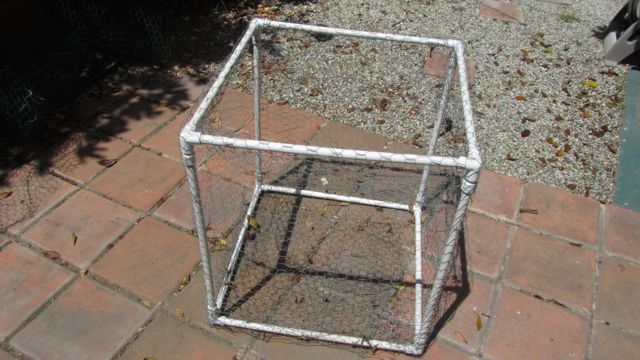
So finally I completed the project that began with the chicken wire matters I spoke of a while ago. Work and such things have a way of intervening for weeks, preventing a good idea from going from conception to completion in what should be a day or two. The plan? To stop throwing away lots of wonderful organic matter and keep it instead, turning it into compost. This makes sense because so much of my garden has rather poor soil, for a start, and for a second matter it just seems wrong to not do it. for a third, it’s fun to do experiments with some microbiology for a change. Microbiology? Well, the object of the exercise is to let nature turn any organic material that you have into compost - full of nutrients for growing new things. Compost is also good for moisture control, good drainage, and a host of other things that are beneficial to plants in the garden. How does nature do this? Bacteria, mostly. But for the bacteria and other microorganisms to do their job (digesting the material), one needs to give them good conditions to live in. Conditions involve the right amount of moisture, air, and food, and the point of my project was first to prepare containment for the compost manufacturing process, and then to prepare a good combination of raw materials, place them properly, and then leave the little organisms to their own devices to do their thing. Here’s a good webpage at Cornell about the various stages of composting, the temperatures involved, and the various organisms (bacteria of various sorts, actinomycetes (a kind of filamented bacterium), fungi (various molds and yeasts), protozoa) that come into play at the various stages.

compost projectSo, phase one: Containment. Well everything is going to be kept together with a cylinder of chicken wire, and so measurement of the desired radius r followed by a quick computation (d=2\pi r) to give me the length I needed to cut, and I was away. Shortly after I realised that my measurements were to be determined by the size of the mouth of the large trash bags I’d bought to add as the liner of the containment cylinder. So I ended up readjusting everything to fit that. I cut everything a bit big to allow for the overlap I Continue reading ‘Composing Compost: Fun with Microorganisms’

Sex and Relationships

How can I resist such topics - among everyone’s favourites, right? No, I’ll stay away from my own take on the subjects and move straight on to pointing you to two rather amusing pieces.

The first, which I found in a post of Sheril’s over on the Intersection, is a YouTube Continue reading ‘Sex and Relationships’

Magnetic Vision?

garden warbler by Tommy Holden. British Trust for Ornithology websiteThis is simply fascinating. I heard about it on NPR. While it is well known that birds are sensitive to the earth’s magnetic field, and use it to navigate, apparently it’s only been recently shown that this sensitivity is connected directly to the visual system (at least in some birds). The idea seems to be that the bird has evolved a mechanism for essentially seeing the magnetic field, presumably in the sense that magnetic information is encoded in the visual field and mapped to the brain along with the usual visual data. (Image: A garden warbler, photographed by Tommy Holden. I found it on the British Trust for Ornithology website, here.)

Have a listen to the NPR interview with Henrik Mouritsen (professor of neurosensory science at the University of Oldenberg in Germany - and among other things also a keen wildlife photographer, I learned from his website), and learn more about his Continue reading ‘Magnetic Vision?’

ScienceWoman’s New Digs

Just thought I’d let you know that the blog of ScienceWoman (that I talked about in an earlier post) has now moved. Her blogging about her day to day experiences and thoughts as an early career woman scientist will be getting a whole lot more attention now that it is under the ScienceBlogs umbrella. Go and have a look at her new digs. She’s already started off nicely with a post asking readers to name their favourite woman scientist, with the resulting interesting contributions and discussions you’d expect in the comments. Go and add your two cents.

While I was over at ScienceBlogs (haven’t been in a long while) I spotted a rather Continue reading ‘ScienceWoman’s New Digs’

They’re Out There (Probably)

alien from the movieLet’s talk about aliens. I don’t mean people coming across the borders of whatever your country happens to be (although I did giggle a decade ago when I was given an official “alien number” by the powers that be back then - though I always regretted bypassing the “alien with extraordinary ability” status that the O1 visa gives you), I mean living creatures from beyond planet earth (it’s also interesting to consider the possibility that the seeds for life on earth may also have come from elsewhere).

It’s one of my favourite topics to consider, which is why I like to follow a lot of the remarkable things we are learning about our neighbouring planets (and other bodies like moons, asteroids, comets, and, yes minor planets like our old friend Pluto), and of course the ever-increasing variety of extra-solar planets (the ones we are discovering orbiting other stars). Overall, it gives one the sense that it is overwhelmingly likely that we are not alone (to use the tired old phrase), which to me is tremendously exciting.

I think we’ll find lots of compelling evidence that there’s lots of simple life on other bodies relatively soon, and I think that when people on the street hear of this, they’ll find it interesting enough. But I suspect that this will completely different to an Continue reading ‘They’re Out There (Probably)’

Brain Building

  brain from http://www.simpsonstrivia.com.arI’ve been sitting here for the whole evening building a set of slides for my talk here at the Cambridge conference (that I still have not got around to telling you about because I’ve been, well, attending it). My talk is at the start of the Wednesday session and so I’m starting early (yeah, I know) so as to build up all the introductory slides with the fancier graphics to lull the viewer into that comfort zone before bombarding them with technical results. You may well know the sort I mean. (image above right: click-to-enlarge-able “scan” of Homer Simpson’s brain, which I got from here.)

Anyway, I was sitting here thinking that what I could really do with right now (what with the jetlag, the sitting through five one hour talks - all great) is a rapid hike up to the top of Runyon Canyon or up to the top of Mount Hollywood in Griffith Park - two of my favourite pick-me-ups (or is it picks-me-up…?). This would get the blood flowing and give me that jolt I need to stay smart and alert for a few more slides before packing in for the night (and then panicking tomorrow that I did not do enough). All of this was running through my head when an email arrived* with this article about how exercise can boost mental function - actually promote the growth of new neurons. The studies Continue reading ‘Brain Building’

Aspens

aspens at maroon lake

The tree from which the town Aspen gets its name. This shot is from the nearby Maroon Lake area.

It’s interesting to note that this is probably mostly all one tree, as the visible trees are Continue reading ‘Aspens’

P-P-Put Down a Penguin

(Title refers to an phrase used in commercials for a chocolate bar that I remember from many years ago: “P-p-pick up a penguin”.)

Anyway: It’s Big. Really big. A recent archeological find of a giant ancestor penguin (Icadyptes salasi) in Peru:

prehistoric penguin

(Comparative graphic from article listed below.)

Continue reading ‘P-P-Put Down a Penguin’

Parthenogenesis, II

bonnethead sharkRemember Flora? The Komodo dragon? I blogged about her here and here. She produced offspring using parthenogenesis while in captivity last year. Well, there was a news story earlier this week about a bonnethead shark in in the Henry Doorly Zoo in Nebraska giving birth to a pup. (Interestingly, zoo-keepers and news reporters seemed uninterested in giving our subject shark a name, as happened for the reptile.)

It was a puzzle for a while as to how she did it (as I learned in a BBC article):

At the time, some theorised that a male tiger shark kept at the zoo could have been the father - but the institution’s three bonnethead females had none of the bite marks that are usually inflicted on their gender during shark sex.

Some even suggested that one of the females could have had sex in the wild and stored the sperm in her body - but the three-year period in captivity made this explanation highly unlikely.

But eventually DNA tests resolved the issue:

Continue reading ‘Parthenogenesis, II’

Talk about the Talk

charles stevensChuck Stevens’ visit went very well indeed. The talk was excellent, and well attended by faculty and students from both Physics and Astronomy Department, and the Neurosciences Research Institute. I’ll tell you a bit more about what he said in a subsequent post, along with pointing to video and slides from the talk, I hope. (Click on left for larger view.)

By the way, when I got to the Steve Reich concert venue, there was a huge line of people waiting to get in. They eventually turned a lot of us (myself included) away due to lack of space.

So I got on my bike and cycled rapidly up Figueroa Street to downtown and found the restaurant where some of my colleagues had taken the guest for dinner. Excellent conversation instead of excellent music. A good trade.

Here’s something I passed on the way to the restaurant. Took a picture while waiting Continue reading ‘Talk about the Talk’

Looking Ahead To Tomorrow

Gosh, where do I begin? It’s going to be a hugely busy day on Monday. I’m excited about Monday first and foremost because of the colloquium. Charles (Chuck) Stevens from the Salk Institute generously accepted my invitation to come and visit USC and give a special colloquium to an audience made up of people from both the Physics and Astronomy Department and the Neuroscience Research Institute. This is because his talk is going to be about thing of interest to both camps! He’s applying physicist approaches -the sort that I do- to biological problems. This is a big deal to me because it is very hard to know when problems in biology actually really need or care about the sorts of things that physicists care about. The last thing you need as a biologist… when you’re happily gathering all those juicy data on various systems and finding out all sorts of highly specialized context-dependent mechanisms… the last thing you need is some arrogant physicist coming in an babbling stuff like “symmetry Continue reading ‘Looking Ahead To Tomorrow’

The Proud Parent

Flora komodo babyThe BBC1 are calling her the proud “mum and dad”. I’m talking about Flora, who is the parent of five baby Komodo dragons so far. Read the story at the link above. flora the komodo dragon You’ll recall my earlier post about her, back when she featured in the “virgin birth” story leading up to the Christmas period. Just to remind you, she is one of the first Komodo dragons known to Continue reading ‘The Proud Parent’

Attack of the Clones?

cloned cowsNo, probably not, but we are probably in for a battle. The FDA is said to be about to announce the approval of using cloned animals for food. The announcement will be on Thursday, but there are several news reports about it already. Here is a link to an AP article written by Libby Quaid. (I also borrowed from that article the picture -left, by Chris Gardner- of cloned dairy cows Cyagra1 and Genesis.)

What will the battle be about? Well, Let’s get the fear-mongering (that opponents of this announcement will use to their advantage) out of the way first. If these were indeed clones in the purest sense of the word, produced in unquestionable circumstances, in an industry that did not already have several unsettling and dysfunctional features to it (see for example here) then there would be no issue. The bottom line is that we should be no more scared of clones than we should be of twins.

But it is not that simple. According to the article to which I pointed, here are claims -backed up with documentation- (I have not read the research, so am merely reporting that it exists) that the cloned animals are not produced in a manner that would be acceptable for the production of animals by other means -there are still many deaths and deformities in the process, and these birth defects are still not fully understood.

Carol Tucker Foreman, director of food policy at the Consumer Federation of America, said the FDA is ignoring research that shows cloning results in more deaths and deformed animals than other reproductive technologies.

The consumer federation will ask food companies and supermarkets to refuse to sell food from clones, she said.

“Meat and milk from cloned animals have no benefit for consumers, and consumers don’t want them in their foods,” Foreman said.

That alone might not be so terrible, you’re thinking, but the big thing (to Continue reading ‘Attack of the Clones?’

Copy Cat Copied

Well, sort of.

I could not resist:

copy cat copies

These are the kittens of Copy Cat, the cat that was cloned back in 2001/2 at Texas A&M. They’re lovely. They were produced the old-fashioned way with a father who Continue reading ‘Copy Cat Copied’

Parthenogenesis

To add to the seasonal mood, I thought I’d point out that there’s a virgin birth about to happen any day now. Maybe even Monday. Fingers crossed. And tail, if you have one. What am I talking about?

Here’s Flora, a proud-looking mum if I’ve ever seen one:

flora komodo dragon

She’s a Komodo Dragon. She lives in Chester Zoo in England. In May, she laid several Continue reading ‘Parthenogenesis’

Little Urchin

sea urchinNo, not pictures of little urchins doing science, as I sometimes have on this blog.

Instead, it’s a story about the sea urchin’s genome being completely mapped out by researchers. Quite a story, and an important one, since about 70 percent (I learned) of the creature’s genes have analogues in human. This is more overlap than we have with Drosophila, for example, the fruit fly being another well-studied system.

Lots to read about (try here , here, and here for example -the latter is where I got the nice image by Alexandra Eaves, above), and a nice piece on NPR to listen to. So I’ll leave you to it.

-cvj