Archive for the 'correlations' Category

Essence

Today I’ve got to give a guest lecture in a class of KC Cole’s at USC’s Annenberg School. I’m supposed to talk on the theme of Art and Science. I’ll cover a number of aspects, I expect (have not written it yet), but it put me in mind of two posts I did a while back on the subject. One was over at Correlations (remember that?) and the other, called Transcendence, was here. I thought I’d reproduce some of the Correlations post, called Essence, here. The back story was that I was working up a contribution to SEED magazine (the December 2007 issue I think) which was doing a cover story on Science and Art, and… well, I’ll let the 2007 me tell you the rest:

While working on the contribution, I was hugely conflicted, for many reasons (variety of themes, variety of pieces, art forms, only 100 words, etc…) and another major theme struggled for dominance – “essence”. How both science and art strive to identify the essential truth about a subject. My original contribution that I submitted to the editors to get their feedback on whether I was on the right track for what they were looking for therefore had a bit more of this in it, and referred to two pieces of art (I eventually chose one and focussed on developing and rewriting around that, using the “transcendence” theme). The piece I used that did I did not use for the final article is perfect for illustrating the “essence” theme, and so to provoke some thoughts in you [...] I include it here, along with some fragments of the paragraphs I was playing with at the time:

Continue reading ‘Essence’

New Voices, Great Name

13point7_rosterI noticed yesterday that there’s a new group blog, at NPR, on science and culture, and – to my pleasant surprise – one of the co-authors is my friend and colleague KC Cole, the well known (and quite marvellous) science writer! I’ve met the physicist Marcelo Gleiser who will be a co-author and he seems like an excellent new voice to hear from. Astrophysicist Adam Frank and Biologists Ursula Goodenough and Stuart Kauffman round out the exciting-looking roster. (I cheekily grabbed a screen shot of the roster photos (left) from their site.) There are a number of lovely pieces up on the site already for you to read.

The blog is called 13.7, a number that might be familiar to you.

No? You might be thinking that it is the new high price for a basic over-priced cup of “gourmet” coffee in some new tediously pretentious cafe in LA (and believe me, I’d not be at all surprised), but I was in fact referring to the 13.7 billion years that is the age of our universe. I think that is the primary meaning they had in mind too. I’m pleased to see these new voices in the blogosphere, and pleased that authors of blogs of this sort can still come up with excellent names! 13.7 is a really rather nice name and, in a slightly inside way, captures the scope, variety, and grandeur of the themes I expect they’ll explore in much the same way that the name Cosmic Variance promised (and delivered) for that group blog back in 2005. I came up with that name a little before we launched the blog (we mulled Continue reading ‘New Voices, Great Name’

Goodbye to Correlations and WIRED Science

Over on Correlations, we’re in the process of saying goodbye. The PBS experiment with a genuinely new (for them) and fun science format, WIRED Science, along with its really fantastic online component (with resources for schools, the general public, the blog Correlations, and so forth), is officially over.

I don’t know exactly what went on behind the scenes at the PBS mother ship, but frankly, it seems that they just did not have the guts to try something new at this time, and are returning to their standard stuff. I thought that the show had a lot of good work in it, including several shining portions, and deserved a bit more time to find its feet. It may well have got there, building followers that would have tuned in regularly for years, becoming a sort of US (and science-oriented) version of the UK’s Tomorrow’s World (a BBC show that ran for 38 years and -despite its flaws- is fondly remembered by many generations). Oh well.

The mood at KCET (the local Los Angeles PBS affiliate that was making the show) was Continue reading ‘Goodbye to Correlations and WIRED Science’

Movie Spoiler?

No, not spoiler in that sense. Doug Liman’s new action movie “Jumper” is all about teleportation, you see, and one of the questions that’s going to be on people’s minds is something like “Is teleportation really possible, or is it just some silly science fiction thing?”. I like it when such questions come up, and I like trying to answer them too.

This time I get to do it officially, since Doug Liman’s people are doing a private screening of the film this evening and there’ll be a panel of some of the film’s creators and a scientist for questions and answers afterward. I’ll be the scientist.

The downside is that I’ll be the bad guy of the evening by having to pour a bit of cold water on some of the flights of fancy. The spoiler, you see, as in spoilsport. The upside (besides, you know, free movie) is that I’ll maybe get to explain some really Continue reading ‘Movie Spoiler?’

Not Science Fiction

Anti-matter. Seeing the previous word, you immediately glance back at the title, right? Strangely, it has been 80 years since the discovery of anti-matter, and we use it routinely in our technology. Nevertheless, anti-matter is still thought of as something from science fiction (and mostly bad science fiction at that).

dirac_equation.jpgIt all goes back to one of my favourite theoretical physicists, Paul Dirac, and you might like how he found it (roughly). He essentially did it by taking the Continue reading ‘Not Science Fiction’

Tales From The Industry XVI – Correlations Meetup and More

It all began over dinner on Thursday night, before the rains began. Some of us met up at Ciudad (a favourite place of mine to eat in downtown Los Angeles, primarily for the mojitos) and the began to get to know each other in person, as opposed to online. I’m talking about the Correlations bloggers, and members of the team who work on the entire Wired Science website (which is excellent, by the way) with which Correlations is embedded. I met most of the latter group at various KCET events (the first screening of episode 1, the wrap party a few weeks ago I never got around to blogging, etc). This however, was the first time I got to meet Sheril Kirshenbaum, although we’d got to know each other so well online I have to say that it sort of felt as though we’d already met. Co-blogger (and show producer) Damon Gambuto arrived a bit later – I’d met him before at the party. The other bloggers coming from out of town to the meeting, Tara Smith and Michael Tobis, I would meet the next day since Michael’s flight was coming in late, and Tara was not feeling well. Tamsin Gray, being stationed in Antarctica, was not going to attend. Of the show host co-bloggers, Chris Hardwick (who I’d already met at the wrap party) would be there next day too. Ziya Tong was away.

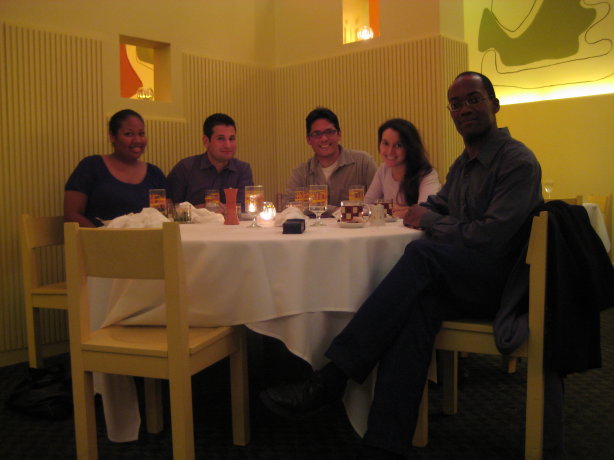
Here’s a shot of some of us chatting at dinner (see also Sheril’s thoughts on this here):

correlations meetup dinner

Damon Gambuto is second from left, and there’s Sheril Kirshenbaum and cvj on the right – click for larger view. There’s also Liz on the left, and Philip Dunn in the centre, both from New Media.

The main purpose of all of this from the bloggers perspective was simply to meet and Continue reading ‘Tales From The Industry XVI – Correlations Meetup and More’

Nitrocellulose

How about a bit of chemistry? My Correlations colleague Chris Hardwick, one of Wired Science’s presenters, did another excellent demo on the show. This time he did it with chemistry teacher Chris Schrempp, who showed us how to make nitrocellulose in a few simple steps, using common cellulose sources such as the cotton balls in your bathroom cabinet. He does a nice job of explaining all the steps and the chemistry going on, and, of course, in the end there are rather lovely residue-free fireballs – just like the ones magicians do!

Enjoy!

-cvj

Essence

Over on Correlations, I posted about the second of the two pieces I was considering as exhibits for some of my thoughts on science and art for Seed magazine. Recall that my first post on this – about the piece and text that I finally submitted for publication – was done a few weeks ago. The theme I brought out there was “transcendence”. For Continue reading ‘Essence’

Antarctic Antics

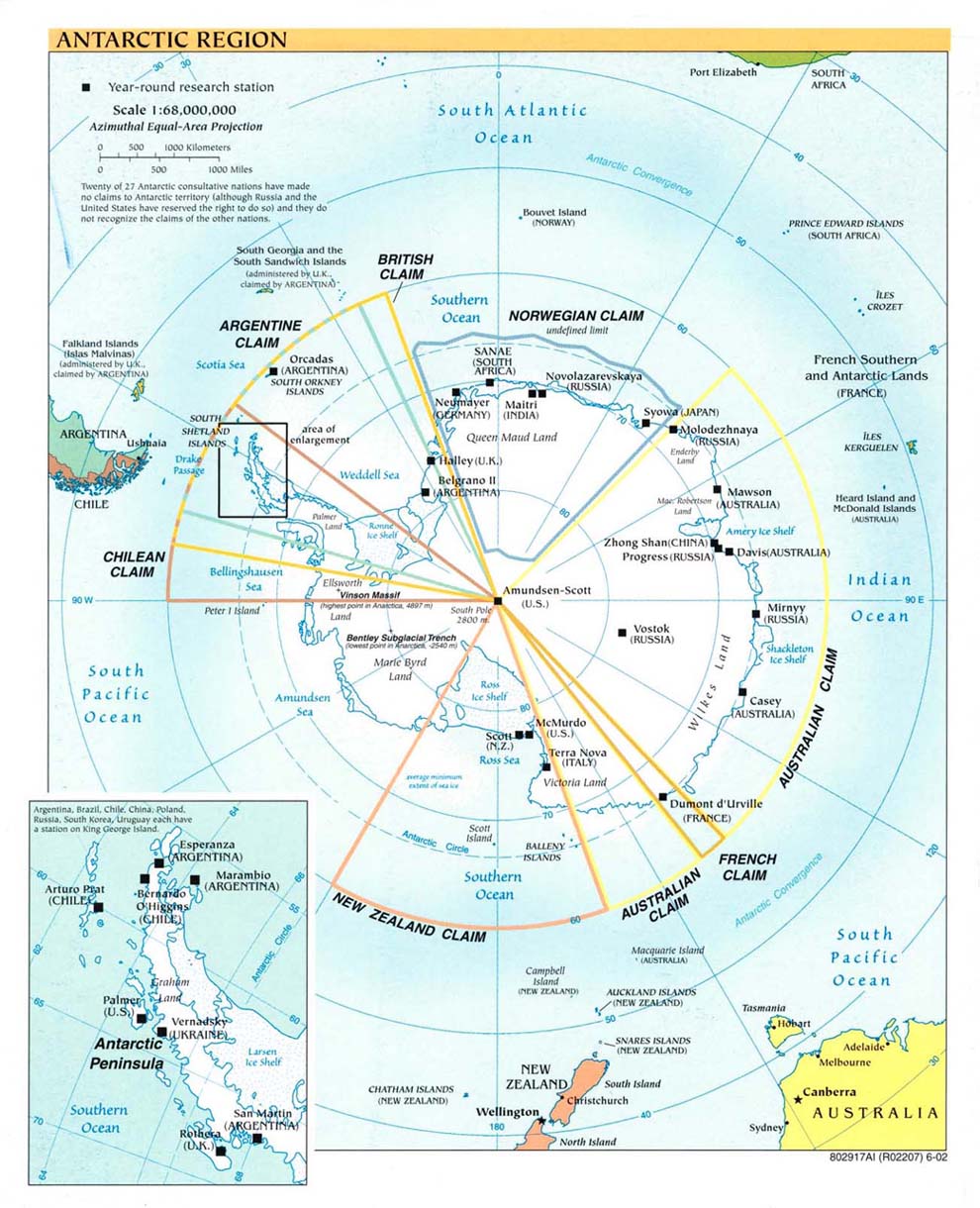
Tamsin Grayantarctic research stationsMy Correlations colleague Tamsin Gray has been updating us on her activities down in Antarctica. I still find it remarkable that there are people regularly going down there, doing all sorts of scientific experiments at several stations. Click the map on the right for a larger view of the layout of the many stations down there. Keep an eye out for Tamsin’s posts – not the least because there are occasionally pictures of cute penguins – to get an idea of some of the things her team are up to.

Recently, for example, Tamsin told us about some new (toys) tools they were working with – tiny airplanes! They fly around and do meteorological measurements.

Over on Correlations I did a post about Antarctica that briefly mentioned some of the physics being done there (AMANDA and IceCube, the neutrino telescopes), but the Continue reading ‘Antarctic Antics’

Climate Matters

There’s been some really excellent material over on Correlations. I recommend having a look. Among that, there’s been some very interesting posts about climate. The most urgent one is by Sheril, in which she reminds us about the behemoth, Cyclone Sidr, which is bearing down on Bangladesh right now, with potential human cost well beyond that of Katrina. One to watch.

The other posts I wanted to point to is the growing series of posts by Michael about climate science. People largely think of climate science in terms of the global warming arguments, but there’s a lot more to it than that. Michael’s trying to build an informative Continue reading ‘Climate Matters’

Hack!

I don’t know if you’ve been watching the new PBS series WIRED Science, but I recommend that you give it a try. There was another excellent episode Wednesday night, covering topics as diverse as organ regeneration, neutrino oscillations, and research in supersymmetry (interview of Jim Gates by Zia). You can see video of lots of the segments here.

To my delight there was another excellent new short segment, called “Hack”, again done by Chris Hardwick in the studio. Recall that I spoke about the “What’s Inside” pieces a few weeks ago. “Hack” shows you how to make something familiar, as opposed to just find out what’s inside something. In this one, Chris (who’s impressively very funny while he does the chemistry: “a funnel…’cos it’s got the word `fun’ in it”) shows you how chemoluminescence works by demonstrating how to reproduce what glow sticks do! Here’s the video:

While I’m on the subject, there’s some news over on my other blogging gig,
Continue reading ‘Hack!’

Weather Vs Climate

[Post reconstructed after 25.10.07 hack]:

My Correlations colleague Michael Tobis has a nice, simple post about the difference between weather and climate that’s worth a look. He starts out:

We climate scientists often hear the case made “If you can’t predict the weather next week, how could you predict the climate in a hundred years?” The answer to the question is hidden in the question. The weather and the climate are not exactly the same thing, and so what you can say about the one and what you can say about the other are also different.

Enjoy!

-cvj

Massive!

[Post reconstruction in progress after 25.10.07 hack (body, comments and images to follow)]:

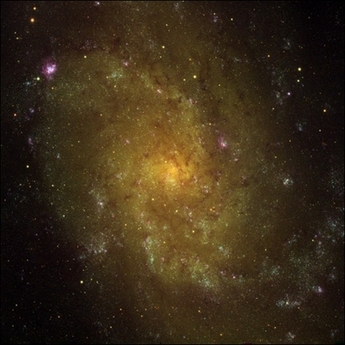
Messier 33 GalaxyThere’s been a recent discovery* of an unusual black hole. It is about sixteen times the mass of our sun. While this might not seem as dramatic as the black holes that are millions of times the mass of our sun that live at the cores of galaxies, such large black holes that result from the collapse of ordinary stars have hitherto been unknown. This presents an important and exciting puzzle about the processes by which black holes form from the collapse of stars. There’s evidently more going on than previously thought, possibly as a result of complicated interactions with its companion star during formation.

(Image: A Harvard-Smithsonian Center image of the galaxy Messier 33, in which the new black hole was found.)

I talk a bit more about this on Correlations, and you can read more about the recent Continue reading ‘Massive!’

Artificial Life?

Sheril had a post about this over on the new blog Correlations, but it is so interesting (and so potentially far-reaching) that I thought I’d point to it here too.

Craig Venter’s been at it again. This time one of his teams of scientists has apparently created a synthetic chromosome in the laboratory. As he said to the Guardian:

this landmark would be “a very important philosophical step in the history of our species. We are going from reading our genetic code to the ability to write it. That gives us the hypothetical ability to do things never contemplated before”.

Continue reading ‘Artificial Life?’

WIRED Science – Show Tonight and Website is Live!

wired science bannerA quick reminder The show WIRED Science (that I mentioned earlier) debuts tonight! Notice also that the website with all the extra material is now live (and rather amazingly well designed -well done the New Media division at KCET), and – don’t forget – debuting also (and already live) is the new blog Correlations (I gave you the back story on that here). You can find a link to it from the site, or go directly here (but go look at the main site too). Please go along and say hi to us over there on our welcoming blog posts. And Tell Your Friends! (That includes you, science-oriented bloggers – it’s in a good cause!).

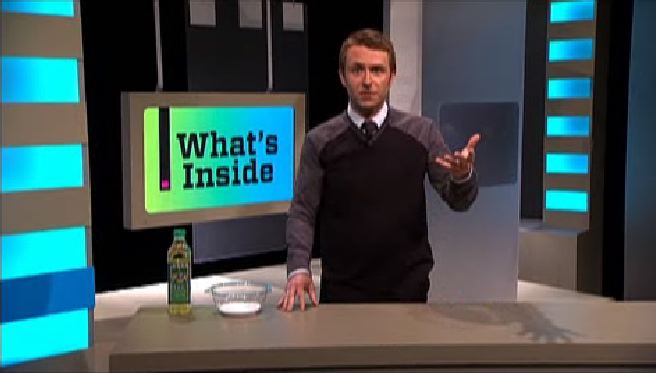
chris hardwickHere’s a teaser for the program, and one of the reasons I have high hopes for it. Here, they strip aside all the fancy stuff and just put a good person in front of the camera to get people thinking about something simple. This is a great thing when done well, and they’ve got the people who can do it. Here’s presenter Chris Hardwick doing a brilliant job of telling you what’s inside a simple everyday product in an entertaining way (link with transcript here, or play right here by clicking below):

Continue reading ‘WIRED Science – Show Tonight and Website is Live!’

Correlations

Some big news:

wired science bannerAs I said in the previous post, there’s more to the new WIRED Science TV show on PBS than just the TV show. The website is going to be full of quite a lot of additional material, starting next Wednesday. There’ll be show episodes, extensions of some of the segments, extra links to expand upon the stories, materials for schools, and so forth. But there’s also something else in the works. There’ll be a dedicated blog for the show, and it is called “Correlations”.

Correlations is a new group science blog, with bloggers of a range of interests. It will be connected to the show in many ways, but will expand well beyond the show into aspects of science and technology of all sorts, according to the tastes of the bloggers involved. There’ll be all sorts of interesting material, from serious stuff to fun stuff, and points in between. I think that it’s a great combination of bloggers (the team was assembled by Leighton Woodhouse, of KCET – we had a great conversation about the whole business of science blogging and science bloggers back during the Summer) and I’m quite excited to see how it goes. Who are they? Well, here’s the list:

Continue reading ‘Correlations’

WIRED Science

I promised some interesting television news earlier, and here it is. Well, it is actually blogging news too. First let me step back a touch. Recall that some time back I mentioned that there were a number of new science shows vying for the nod from PBS to be their new primetime science show? Viewers could go in and vote on which show they preferred. Well, the show that won this was WIRED Science, the show I also told you more about here. I’m pleased about this since I thought it was actually the best of the bunch.

wired science bannerSo they’ve made some cast changes, and made new episodes (and are in the process of making more). The format is sort of like a magazine, so there are two people based in the studio (Chris Hardwick and Kamala Lopez) who introduce segments that are then played. These segments are essentially field reports from various reporters and agents in the field (Ziya Tong and Adam Rogers are two other principals in the studio at the start, but they are mostly doing field reports). There will also be some studio interviews (Ziya interviews Paul Kedrosky in the first show), and some other studio segments, like “What’s Inside” by Chris Hardwick, where he goes through a description of what’s inside an everyday household object or material. (I hope they do more of those – he’s really good at that.) For those of you from the UK, you’ll recognize the format – it is essentially like Tomorrow’s World used to be, but with more science1 (although since this is a WIRED project too, there’s going to be the fun/cool toys aspect).

wired science cast

The show’s headliners: Chris, Ziya, Adam and Kamala

The first one airs next week, on Wednesday October 3rd at 8:00pm. There’s a page here you can go to in order to have a look at the cast, and also see some clips from Continue reading ‘WIRED Science’